
What Is a K-pop Comeback? A Complete Beginner's Guide
The word “comeback” is the first thing that trips up newcomers. An artist releases an album, promotes it for a few weeks, and three months later the news says they are making a comeback. From what? They never went anywhere. Here is what the term actually means and how the whole cycle works.
”Comeback” just means “new release”
In K-pop, a comeback is a new release cycle by an artist who has already debuted. It can involve an announcement, teaser campaign, release day and music-show performances, but smaller digital releases may skip parts of that sequence.
The term is usually traced to Korean music broadcasting, where a group’s first performance of a new song on a music show is literally called a “comeback stage.” However it started, the name stuck — and now the entire release cycle is called a comeback.
A debut, by contrast, is an artist’s first official release or promotion cycle. Calendars track both, but only later release cycles are normally called comebacks.
The anatomy of a comeback cycle
A common rollout follows the sequence below, though agencies can stretch it, shorten it or skip steps:
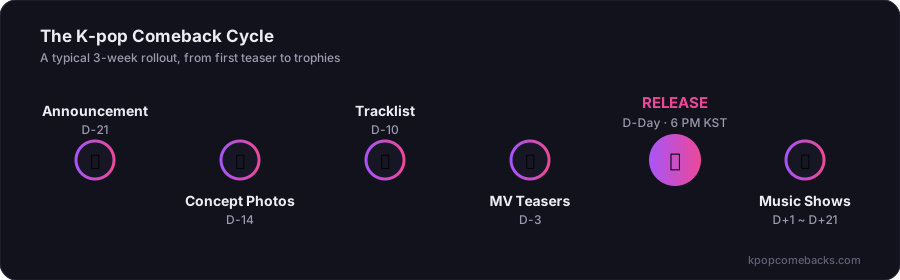
- The announcement. A date, usually revealed through a cryptic teaser image or a “coming soon” post at midnight KST.
- Concept photos. Batches of styled photo teasers that reveal the album’s visual concept. Big groups often release several versions over multiple days.
- Tracklist. Song titles, producers, and which title track will be promoted.
- MV teasers. One or two short clips of the music video.
- Release day. The album and music video become available. 6 PM KST appears often on Korean schedules, but noon, 1 PM, midnight and unannounced times also appear in our calendar. The upcoming list converts announced Korean and Japanese times for the visitor’s timezone.
- Music show promotions. During a promotion period, the group may perform the title track on Korea’s weekly music shows while fans stream, vote and buy toward those shows’ scores.
Release types, decoded
K-pop uses release formats that don’t map neatly onto Western terms:
- Digital single — one or two songs, streaming only, no physical album.
- Single album — a physical release with usually one to three songs. Yes, “single album” means a physical single; it’s a Korean industry term.
- Mini album (EP) — commonly four to seven songs, though the label is not a strict track-count rule.
- Full album (studio album) — generally larger than a mini album; exact track counts vary.
- Repackage — an earlier album issued again with new material or packaging.
- Pre-release single — a song released a few weeks — sometimes a month or more — before the main album to build momentum.
That’s the short version. For track counts, Japanese release types, and why “single album” only makes sense in Korea, see the full K-pop release types guide.
Why fans track comebacks so closely
First-week physical sales (called chodong in Korean — here’s how that number actually works) are a visible measure that fandoms follow, while early streams contribute to chart performance. That makes release day a focus of fan activity rather than just the day a file appears online. Concert culture has its own related gear, including the official lightsticks used for supported venue effects.
If you want to keep up without following forty official accounts, that’s exactly what our comeback calendar is for — every confirmed release, organized by month. And when you’re ready to build a real notification setup, the five ways to track releases guide walks through it.