
K-pop Music Shows Explained: Wins, Voting, and Why Fans Care So Much
Korea runs a weekly televised competition that most countries have no equivalent for: music show wins. A group performs on TV, a score appears, someone walks off with a trophy, and the fandom either celebrates for a week or takes the loss personally. During a comeback this happens every week, and the scoring behind it is less obvious than it looks.
The weekly circuit
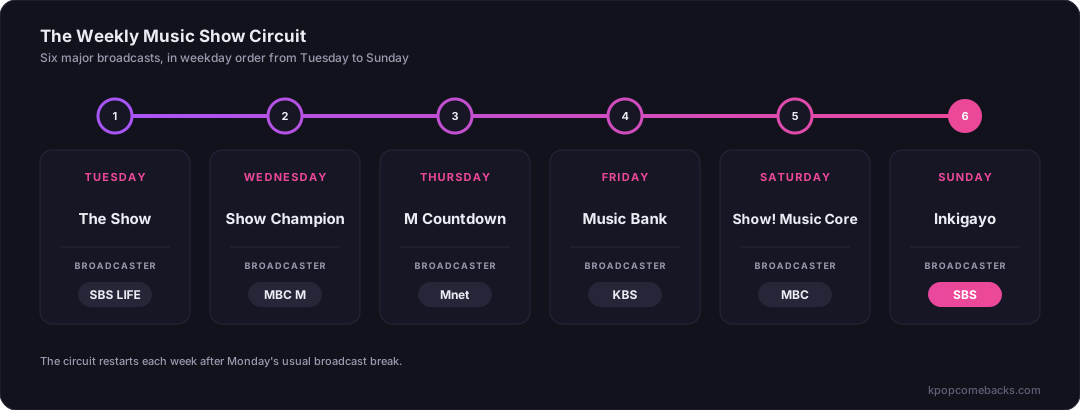
Korea runs a music show almost every day of the week, each on a different network:
| Day | Show | Network |
|---|---|---|
| Tuesday | The Show | SBS Life |
| Wednesday | Show Champion | MBC M |
| Thursday | M Countdown | Mnet |
| Friday | Music Bank | KBS |
| Saturday | Show! Music Core | MBC |
| Sunday | Inkigayo | SBS |
During promotions, a group typically performs its title track on most of these shows for one to three weeks. That’s why comeback season feels relentless: it basically is. One prerequisite most viewers never see: each network screens lyrics before a song can be performed on its show — a big part of why K-pop lyrics stay famously clean.
What a “win” actually is
Each show ranks currently-promoting songs using its own scoring formula — a weighted mix that usually includes digital streaming and downloads, physical album sales, YouTube/MV metrics, broadcast points from being played on that network, and fan voting through the show’s app during a live voting window. The exact weights differ per show, which is why a song can win on one show and place lower on another in the same week.
The first-place song gets the trophy, a live encore stage, and — most importantly for fans — a tangible, countable achievement. A group’s “total wins” is fandom shorthand for how successful an era was.
The vocabulary
- First win (첫 1위): a group’s first-ever music show trophy. This is a genuinely emotional milestone — expect tears on stage. For rookie groups it can take years, and the moment it happens is replayed forever.
- Triple crown: winning three weeks in a row on the same show with the same song, which usually retires the song from that show’s chart.
- All-kill: unrelated to music shows — it means topping all major Korean digital charts simultaneously. A song can be an all-kill monster but promote lightly and collect few show wins, and vice versa.
- Encore stage: the winner performs again as credits roll, often with live vocals and zero pressure. Encore fancams get dissected by the entire internet.
How international fans participate
More of the score is within fans’ reach than you’d think:
- Pre-voting apps. Shows run pre-vote windows on apps like Mubeat, Whosfan, and Idol Champ. Voting usually costs in-app currency earned by watching ads — fandoms organize daily “farming” routines during comeback week.
- Live voting. Some shows open real-time voting during the broadcast itself, typically for the top candidates.
- Streaming and MV views. YouTube metrics count toward several shows’ formulas, which is why fandoms push MV streaming goals in the first week.
- Buying the album/single. Physical and digital sales feed directly into most formulas.
The catch: every show uses different apps, windows, and rules, and they change year to year. Fandom accounts on X publish updated voting guides at the start of each comeback — search “[group name] voting guide” and someone has already made the infographic.
Does any of this actually matter?
Commercially, one trophy changes little. Culturally, it changes a lot: wins are the scoreboard of an era, the moment rookie groups become “award-winning artists,” and the payoff fans point to for weeks of streaming and voting. If you’re new to K-pop fandom, your first comeback-week voting grind is a rite of passage.
Music show promotions start the week an album drops — track exact release dates on our comeback calendar so you know when the circuit begins for your group.