
The GFRIEND Saga: A Rain-Slicked Stage, a Shock Goodbye, and K-pop's Sweetest Reunion
A personal note before we start: of all the groups this site covers, this is the one I loved most — the story below is why every article here is signed YUJU.
Some K-pop stories are fictional universes built by agencies. The best ones just happen. GFRIEND’s story — six members, one viral disaster-turned-legend, a disbandment nobody saw coming, and a reunion almost nobody gets — reads like it was written in advance. It wasn’t. Here’s the whole arc.
Act 1: Six girls from a company nobody knew
GFRIEND (여자친구) debuted in January 2015 under Source Music — at the time a small independent agency with no famous alumni and no safety net. Sowon, Yerin, Eunha, Yuju, SinB, and Umji arrived with “Glass Bead” and a concept the industry would later call “powerful innocence” (파워청순): schoolgirl imagery, knife-sharp synchronized choreography, and a work ethic that read on camera.
Rookie girl groups from small agencies rarely survive their first year. GFRIEND’s first months were promising but modest. What changed everything wasn’t a promotion strategy. It was rain.
Act 2: The stage that made them
September 5, 2015. An outdoor SBS radio event in Inje, Gangwon Province. The stage was soaked, and during “Me Gustas Tu” the members kept slipping — Yuju went down eight times by Time’s count, and SinB took a fall too — and every single time they got up and snapped straight back into formation without missing a beat.
A fan-filmed video of the performance passed a million views in two days and went internationally viral — coverage reached Billboard and beyond, and the original fancam has since passed 17 million views. Yuju later revealed she’d been performing with a twisted finger from the falls. In an industry obsessed with polish, GFRIEND became famous for the opposite: what they looked like when everything went wrong.
The timing was almost absurd — the song they kept falling during became their breakout. “Me Gustas Tu” climbed the charts long after release, and “professionalism” became the group’s brand before they’d ever won anything.
Act 3: The rise
Then came “Rough” in early 2016 — the song that turned a promising rookie group into chart royalty. It dominated Korean streaming for weeks and stands as one of the biggest Korean hits of that year. The follow-up singles kept landing, and by decade’s end GFRIEND had stacked up one of the most consistent discographies of their generation, evolving from bright innocence toward moodier, more cinematic work like “Time for the Moon Night.”
In 2019, the plot thickened: Big Hit Entertainment — soon to become HYBE — acquired Source Music. Fans read it as security. A powerhouse label, new resources, a bigger future.
Act 4: Four days’ notice
On May 18, 2021, Source Music announced that all six members’ contracts would end — effective May 22. Four days later.
There had been no farewell tour, no final comeback, no warning. The group had been actively promoting months earlier. The fandom, BUDDY, went from confusion to open fury, and Source Music eventually apologized for how the news was delivered. Years later, Sowon pushed back on the word “disbandment” — the group never disbanded, she said; their exclusive contract with Source Music had simply ended. But functionally, six years of GFRIEND stopped mid-sentence.
It remains one of the most cited examples in K-pop of how abruptly a beloved group can end without any scandal, decline, or drama — just business, delivered badly.
Act 5: Scattered, not gone
The members kept working. Eunha, SinB, and Umji regrouped as VIVIZ in early 2022 and built a steady discography of their own. Yuju launched a solo career; the others pursued solo music and acting. And through it all, in interviews and lives, members kept dropping the same quiet promise: the six of them weren’t finished.
Act 6: The reunion that actually happened
K-pop fans are trained not to believe reunion talk. Then, in September 2024, Source Music confirmed a tenth-anniversary reunion — and when it arrived, it really was all six members.
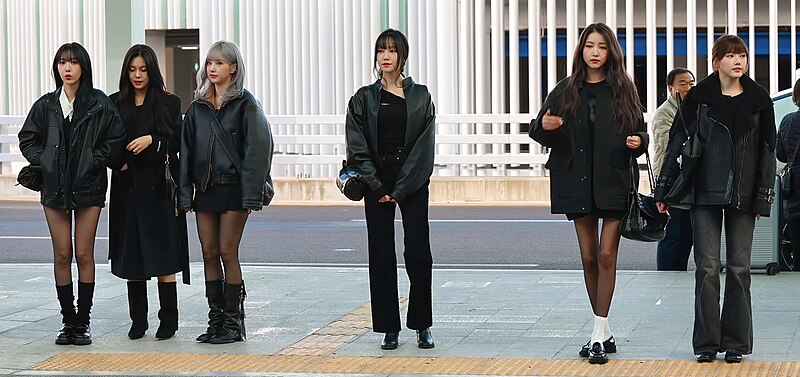
In January 2025, GFRIEND released Season of Memories — new music, together, four years after the goodbye — and played three sold-out nights at Seoul’s Olympic Hall before taking the show across Asia: Osaka, Yokohama, Hong Kong, Kaohsiung, Taipei.
The group that became famous for getting back up after falling had done it one more time, at full scale.
Why this story sticks
GFRIEND’s saga resonates because it’s the rare K-pop narrative with a complete emotional arc — underdogs, a defining viral trial, dominance, an unjust-feeling ending, and an earned reunion. No fictional universe required; reality wrote a better script.
For how agencies build the fictional kind of story, read our pinned explainer: What Is K-pop Lore? And to catch the next chapter of anyone’s story as it happens, there’s always the comeback calendar.
— written by a BUDDY who is, as ever, waiting for the next comeback.